
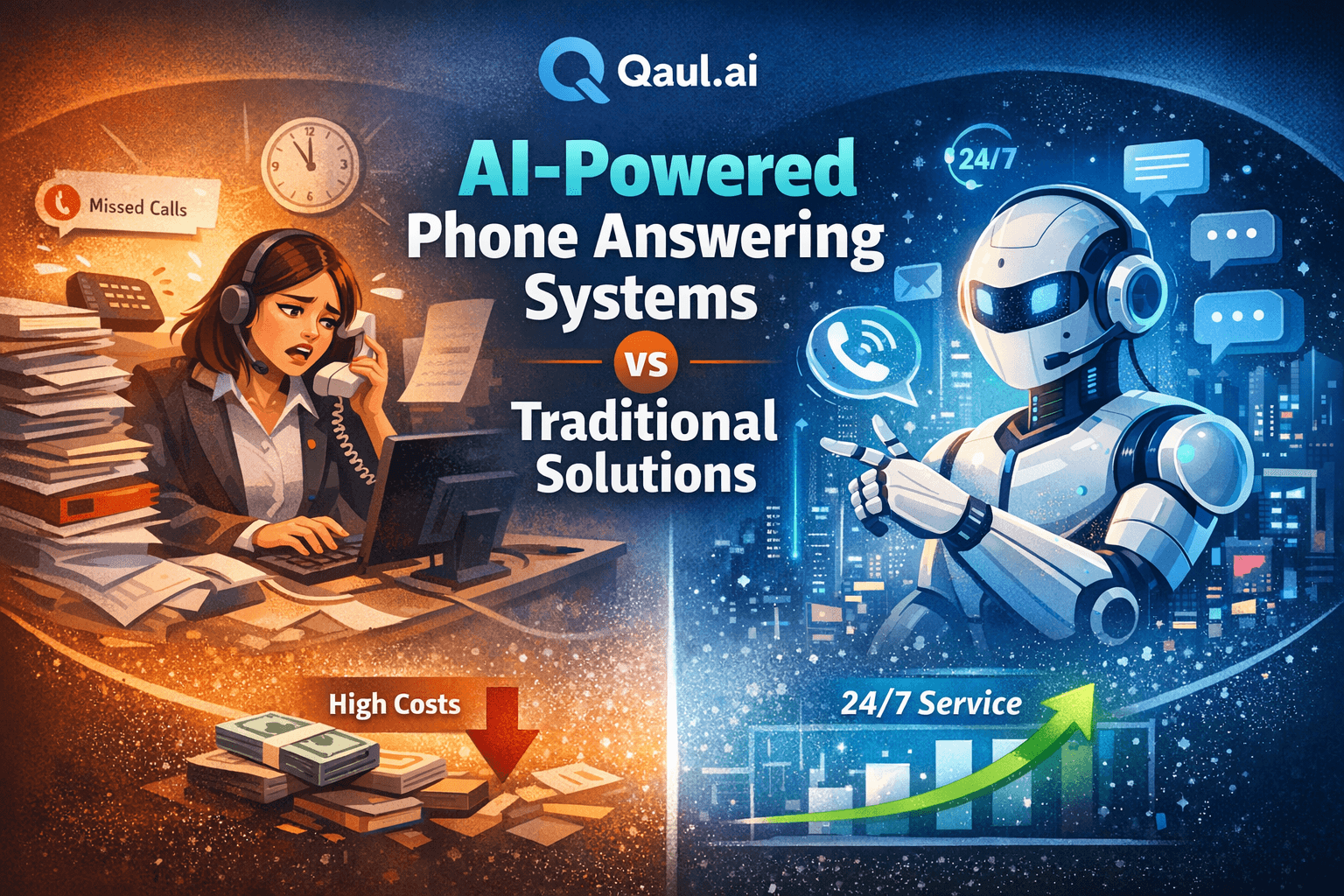
A missed call is not just a missed conversation. It is lost revenue, a lost opportunity, and sometimes a lost customer forever. Many businesses still rely on outdated systems that cannot keep up with modern demand. Nowadays, Customers expect fast answers, clear communication, and immediate support. When they do not get it, they move on.
This AI phone answering comparison explores why companies are rethinking their approach to business communications. It breaks down traditional systems, modern AI-powered phone systems for businesses, and what the future holds.
If your team handles high call volume, this guide will help you make a smarter decision. So, don’t stop reading till the very end.
Phone Answering Technology Evolution
Business phone systems have evolved dramatically over the past few decades.
The Era of Manual Response
At first, companies relied entirely on manual receptionists. These professionals managed calls, transferred lines, and took messages by hand. While personal, this model depended heavily on availability and staffing.
Automated Call Response Systems
Then came automated call response systems. Interactive voice response menus allowed callers to press numbers for specific departments. This reduced some workload but created rigid, frustrating experiences.
Digital Routing and Cloud
Phone answering technology evolution continued with cloud systems and digital routing. These improved flexibility but still relied on human staff for meaningful interaction.
Today, phone answering system innovation has entered a new phase. Successful businesses are replacing old phone systems with AI since it can understand speech, interpret intent, and respond naturally.
However, people also mix things when it comes to AI receptionists vs virtual assistants. Virtual assistants respond manually but are connected remotely. On the other hand, AI receptionists is a smart solution optimized for handling responses on auto.
The Hidden Cost of Missed Calls No One Talks About
Most businesses underestimate how much revenue slips away through missed calls.
A service company that misses just five calls per day can lose thousands each month. In healthcare, a missed appointment request often means a patient books elsewhere. In home services, customers don’t bother if you don’t answer, they just call the next provider on the list.
Peak hours create pressure. Lunch breaks, after-hours calls, and seasonal spikes overwhelm front desk teams. Even skilled receptionists cannot answer multiple calls at once.
However, the impact of AI on customer service phone systems is changing this reality. AI in business communications ensures that every call gets answered, even during high demand.
AI Customer Support Systems vs Traditional Solutions
Traditional Phone Systems Limitations
As businesses grow, the weaknesses of traditional phone systems become more apparent. These limitations affect customer experience, operational efficiency, and scalability. Few key limitations that can impact your business growth are as follows:
- Limited availability during office hours only
- High staffing costs including salaries, benefits, and training
- Inconsistent customer experience due to human variability
- Lack of actionable analytics on call patterns and missed opportunities
- Slow scalability when call volume increases
How AI-Powered Phone Systems for Businesses Actually Work?
AI phone answering systems for businesses like Qaul.ai use artificial intelligence to handle incoming and outgoing calls automatically. Unlike simple automated menus, these systems understand natural language and they respond conversationally and have the ability to adapt to caller intent.
AI-driven customer service tools analyze speech in real time. They identify keywords, detect urgency, and route calls intelligently. This reduces hold times and eliminates confusion. Moreover, AI technology in customer service calls allows businesses to book appointments, answer common questions, process basic requests, and escalate complex issues seamlessly.
Intelligent phone answering solutions also integrate with CRM platforms. They log calls, capture customer data, and provide insights through dashboards.

A Quick Comparison You Can’t Afford to Miss
Below is a breakdown of AI customer support systems vs traditional solutions.
| Feature | Traditional | AI-Powered (Qaul.ai) |
|---|---|---|
| Availability | Office hours | 24/7 |
| Scalability | Hire more staff | Instant |
| Cost | Salary + benefits | Predictable subscription |
| Analytics | Limited | Real-time insights |
| Call overflow | Missed calls | Automated handling |
5 Irresistible Benefits of AI Phone Answering
AI phone answering is no longer just a convenience. It has become a strategic tool for businesses looking to improve customer experience, optimize operations, and scale efficiently. The benefits are measurable, impactful, and relevant across industries.
Increased Revenue Capture
Every missed call is a missed opportunity. AI-powered phone systems ensure that all incoming calls receive immediate attention.
By handling high call volumes automatically, businesses can:
- Respond to potential leads instantly
- Book appointments without delay
- Reduce lost sales from unanswered calls
This continuous coverage directly translates into higher revenue and stronger customer retention.
Operational Efficiency
Advanced phone answering solutions streamline repetitive tasks that typically consume staff time.
AI can:
- Answer frequently asked questions
- Route calls to the right department automatically
- Log and organize customer data
This allows human employees to focus on complex interactions, strategic projects, and personalized service. Teams spend less time on routine tasks and more on high-value work.
Consistent Customer Experience
Customer trust depends on reliability. AI delivers consistent responses every time.
Unlike human staff, AI does not vary in tone, accuracy, or response quality. It eliminates errors from miscommunication and reduces the risk of negative experiences caused by human factors such as fatigue or training gaps. This consistent service strengthens brand reputation and builds long-term loyalty.
Measurable Performance Metrics
How AI enhances customer phone interactions can be tracked and analyzed. Businesses gain access to:
- Shorter wait times for callers
- Higher appointment booking rates
- Improved customer satisfaction scores
Real-time analytics provide insights into call trends, peak hours, and customer behavior, allowing management to make informed decisions and improve operations continuously.
Cost-Effective Customer Service Automation
AI phone systems reduce the need to expand payroll for growing call volumes. Businesses can scale effortlessly using software without adding new staff.
Automated call handling lowers overhead costs, making customer service automation a cost-effective solution for both small businesses and large enterprises. By managing peak demand efficiently, AI reduces operational stress and frees up resources for other strategic priorities.
Introducing Qaul.ai as Your Go-to AI Powered Phone Answering System
As businesses explore next-gen phone answering solutions, they need platforms built for modern demands. QauL.ai represents a new generation of AI-driven customer service tools designed to transform AI in business communications.
Here are few key factors you should opt for Qaul.ai:
Flexibility for Lean Teams
Small businesses often operate with limited staff, where one person manages calls, scheduling, and customer support simultaneously. During busy periods, service quality can drop, leaving customers frustrated.
Qaul.ai helps by:
- Handling routine calls automatically
- Routing inquiries to the right team member
- Managing call overflow during peak times
This ensures every customer interaction is addressed, even with a small team.
Cost-Effective Customer Service Automation
Budget constraints are a common challenge for growing businesses. AI call assistants for small businesses provide 24/7 coverage without hiring additional staff.
Predictable subscription pricing simplifies financial planning. Automating routine interactions allows teams to focus on high-value tasks that drive growth, while maintaining professional, reliable service.
Industry-Specific AI Answering Services
Qaul.ai’’s flexibility allows it to support multiple industries effectively:
- AI answering service for accounting: Automates client inquiries, appointment scheduling, and follow-ups
- AI answering service for eCommerce: Handles order queries, returns, and product questions instantly
- AI call assistant for small businesses: Provides general support across service sectors with intelligent routing
- AI answering service for healthcare practices: Manages appointment requests, patient follow-ups, and prescription inquiries
- AI answering service for legal firms: Screens calls, schedules consultations, and tracks case-related inquiries
- AI call assistant for real estate agencies: Handles property inquiries, schedules showings, and qualifies leads
These solutions allow small businesses to compete with larger competitors by delivering professional, consistent, and reliable customer support.
Scalable Growth
As businesses expand, Qaul.ai scales instantly to handle increasing call volume. There is no need for recruitment, training, or extra overhead. Automation, intelligent routing, and 24/7 availability allow lean teams to deliver exceptional customer experiences while supporting long-term growth.
What’s Next?
So, if you are ready to skyrocket your business growth, book a demo with our team and explore how Qaul.ai can help your business achieve new heights without breaking your bank and peace of mind. See you on the other side!
FAQ
What is an AI-powered phone answering system?
An AI-powered phone answering system uses artificial intelligence to manage incoming calls. It understands natural language, responds conversationally, and routes calls intelligently without relying solely on human operators.
How does AI-based call handling work?
AI-based call handling analyzes speech in real time. It identifies intent, answers common questions, schedules appointments, and transfers calls when needed. It integrates with CRM systems to log data and provide analytics.
Is AI phone answering cost-effective for small businesses?
Yes. AI phone systems for small businesses offer predictable subscription pricing. They reduce staffing costs and prevent revenue loss from missed calls, making them a cost-effective customer service automation solution.
What are the limitations of traditional phone systems?
Traditional phone systems limitations include restricted office hours, high staffing costs, inconsistent service, limited analytics, and slow scalability during high call volume.
Can AI replace a human receptionist?
AI can handle routine and repetitive tasks efficiently. However, complex or sensitive conversations may still require human involvement. Many businesses use hybrid models that combine AI and human support.
What is the future of automated phone systems?
The future of automated phone systems includes predictive intent detection, deeper CRM integration, and more natural conversations. Phone answering system innovation will continue to enhance personalization and efficiency.
Zain Ul Abideen
Content Marketing Enthusiast with a passion for crafting compelling narratives that drive real business results. Specializing in digital transformation, growth strategies, and data-driven marketing solutions that deliver measurable ROI.